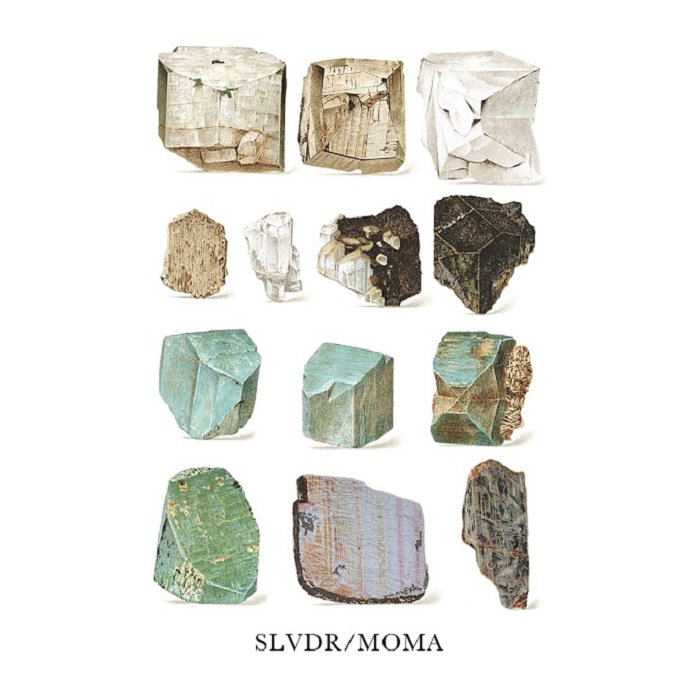
Album Review: SLVDR/MOMA SPLIT 7″

Standard

The strength of a musical community runs only as deep as the dedication people have to support the music contained within it.  And no, I’m not talking about how many people go to your local show or how many likes you have on Facebook, I’m talking about the group of musicians and creative individuals who define your music scene.  The interconnectivity between bands and healthy competition that results in pushing each other’s limits is what makes a music scene great.  I think we all understand that something happened to live music when the internet killed the same video star that killed the radio star.  A lot of things have changed and perhaps made it harder to build a thriving local music scene in this day in age.  It’s really easy to complain about this and yearn for the “good old days”, but I think we also all realize that while technology may be removing some physical human interaction, the benefits or digital human interactions can lead to some great musical coalescence.

I’ve always wanted to start a small, independent record label.  And whenever I’ve felt inspired to do so I am quickly yanked back to reality by the consequences.  Small labels are all hard work with little to no monetary pay off.  We’ve all heard of crimes of passion, well, small record labels are definitely labors of passion.  It may even require some level of insanity to start your own small label.  But these labels are the ones who make life easier for those of us interested in finding new, underground music.  And when a few small labels join forces from separate areas of the world to bring bands together from opposite ends of the world, we get a remarkable split featuring Rio de Janeiro’s SLVDR and Japan’s MOMA.  The logistical feat in bringing these bands together is both commendable and a fantastic testament to the importance of connectivity and interaction in the musical world of the lesser known.

Released by Ohio labels Tightwolf Records and Delayed Gratification Records along with Norway’s Kakusan Records, this three song split is definitely worth listening to more than once.  We’ve all heard the old adage that music is the universal language.  If any actual language barrier exists its is quickly demolished by the musical work of SLVDR and MOMA.  Dubbed “post-math” by some, this roughly thirteen minute split moves very quickly.  I’m a fan of instrumental, post-rock music, but I tend to lean more towards the cinematic, drawn out styles as opposed to the quick-moving, math-centered instrumentals.  Because the word “math” is in the genre titled, I just assumed I would have to think too much, but both SLVDR and Moma do an impeccable job of luring you in and letting you lose yourself in the music.

Each record label has a unique vinyl color for the SLVDR/MOMA Spit 7

Each record label involved has their own unique vinyl color for the SLVDR/MOMA Split 7″

SLVDR kicks the record off with their song ‘Mike 80 and I was immediately impacted by the drumming prowess.  Being the foundation of essentially every musical endeavor, if the drums lack in discipline the result is a horrible recording.  I’ve engineered several recording sessions with a less than competent drummer, and you can immediately tell that the ship is set to sink when the drummer is unable to squeeze a fill in or is trying too hard to do as much as he can.  SLVDR does a lot in very small time frame, but they pull it off beautifully.  Being fairly new to this off shoot of the “post” movement there are several sections of drumming that I just haven’t heard before.  I’m not weathered or versed enough to call it innovative but it is absolutely impressive and is definitely the selling point for me and one of the reasons I decided to review this split.

Like the drums, the guitar bass work is exceptional.  The use of modulating effects is calculated and not over done and beautifully lends itself to filling out SLVDR’s sound which can be difficult to obtain as a three-piece.  I’m a sucker for hooks and the guitar work grabs me for the first time when the band goes heavier at about the 1:30 mark.  Overdriven and straight forward, the simplicity of this section stuck in the midst of ever changing and evolving lines is fantastic songwriting.  These guys are totally capable of filling up a full length with complex time and key changes but taking moments to simplify and grab the ear of the less math inclined enthusiast, like myself, is laudable.  Following a crescendo of gritty guitar and heavy drumming, SLVDR ends with a chaotic math infused outro that ends abruptly, giving way to the piano driven excellence of MOMA.

Japan’s MOMA catches you from the beginning with relaxing piano lines that carry and define their song writing.  Beneath the beauty of the piano lies a solid rhythm section that incorporates numerous time changes and complexities within the music without overpowering or taking away from the gracefulness of the piano.  Initially, I didn’t even notice how frequently MOMA was moving from one time signature to another.  They are truly masters of exploring every opportunity to add or remove a beat here and there while still maintaining an easy to digest sound.

Through the first song entitled “32 Ave“, the guitar work takes more of a backseat to the piano and only adds in a few nicely worked flourishes here and there.  This is not something that is easy to do for many guitar players.  Understanding simplicity and seeing the song as a whole is to some a natural gift, but to others it takes years of practice.  Allowing the piano to dominate the melody in “32 Ave” gives the song a gentle, easy-listening quality that works very well for me.

MOMA was able to fit a second song onto this split called “SUN.  This song allows the listener to hear the playing ability of both the guitar and the bass while still getting a pleasing dose of fantastic piano melodies.  The ability to carefully place a bunch of notes into a small space is a profound skill I’m not sure I will ever understand.  However, like SLVDR, MOMA does this very well and nothing seems too full or overdone.

slvdr-moma-international-split-stream

While album reviews tend to focus solely on the band or bands involved, I feel it is important to acknowledge the work by the labels involved in putting this split together.  I applaud the effort in bringing two bands from different corners of the world together.  The internet has made this task fairly straight forward but the idea to pursue this split and the trust these labels have earned is remarkable.  For SLVDR and MOMA to toss these labels a song or two and trust that they will nourish and maintain the integrity of their art says an awful lot about these small labels from Ohio and Oslo.

Take a minute or two out of your day and go check out both the music on this split and the great packaging decisions between the three labels.

C.J. Blessum
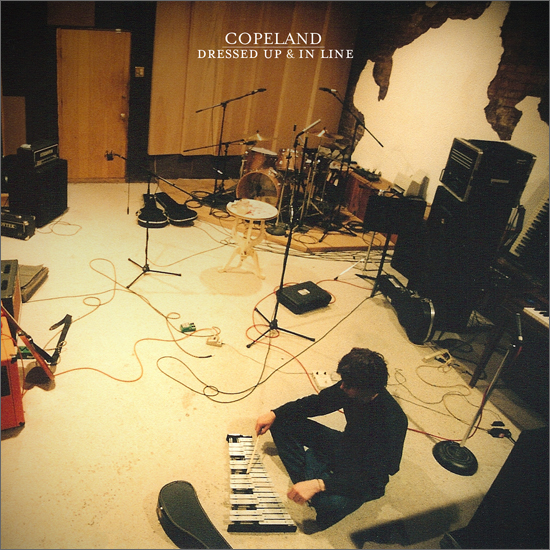
Buried Treasure: Copeland – Black Hole Sun (Soundgarden cover)

Standard

Buried Treasure is a semi-regular feature that explores some hidden musical gems – the rare and forgotten B-sides, covers, hidden tracks, live versions and alternative takes that deserve some recognition.

There are a few thematic changes that mark the start of the winter season here in Montana for me.  First and foremost, snow.  This morning I awoke to the first snow of the year here in the northern hemisphere.  And for reasons I cannot explain, the first smattering of snowfall triggers my brain to start playing my collection of Copeland albums.  Snow and Copeland.  Makes sense right?  Nothing screams snow more than a band from Lakeland, Florida.  All confusing correlations aside, the colder and snowier it gets here in Montana, the more and more Copeland finds it’s way into my music listening rotation.

Curiously enough, along with the morning snow, I was asked by Joseph James to write an entry for the Buried Treasure segment.  I have made it a point to be more in tune to the signs and synchronicities in life and knew that I absolutely needed to write an entry and it absolutely needed to be on Copeland.  Thankfully, Copeland’s long musical career is full of forgotten B-sides, covers, and hidden tracks which made selecting a subject for this entry easy.

For those who may not know, Copeland is an American rock band with a uniquely beautiful quality.  This beauty can most likely be attributed to the voice of their frontman Aaron Marsh.  As a person who tends to lean toward sadder, more angsty styles of music, Copeland tends to be out of place in my record collection as the majority of their work is fairly uplifting and for lack of a better word, nice.

Perhaps it is this “niceness” that caused me to stop and look twice when I first heard the all too familiar lyrics of “Black Hole Sun” being sung by none other than Aaron Marsh.  Granted, I was listening to Copeland’s 2007 release “Dressed Up & In Line” at the time and should’ve known that it was of course Aaron Marsh singing the lyrics of Chris Cornell and Soundgarden’s 1994 hit “Black Hole Sun”.  But nonetheless, the stark contrast between Aaron Marsh’s voice and the gloomy vibe of “Black Hole Sun” was a quick head turner.

It’s always impressive when an uplifting artist like Copeland can take on a sad, dark medium like “Black Hole Sun”, which some say is slang for a particular way of preparing heroin, and turn it into something that listeners, like myself, actually prefer over the original version.  Taking on a cover with as much notoriety as “Black Hole Sun” takes a tremendous amount of courage, especially when it comes from an entirely separate genre of music.

Check out Copeland’s “Black Hole Sun” cover:

And now, with all seriousness set aside, whether or not you like Copeland’s cover of “Black Hole Sun” one must at least take the time to listen to their alternate, hidden-track version of their cover.  This “Bonus Track” was tucked roughly fifteen minutes into the sixteenth track of “Dressed Up & In Line”.  I have absolutely no clue who is singing this version (possibly their drummer Jon Bucklew?), but it’s definitely not Aaron Marsh.  However, this individuals ability to power through the entire song without losing their composure is absolutely commendable.  I challenge you to listen to the entire song without laughing.
Here’s Copeland’s alternate cover of “Black Hole Sun”:
C.J. Blessum

Welcome to the Will Not Fade family CJ Blessum

Standard

CJ Blessum has joined the Will Not Fade team as a contributor. We first met over the internet when he asked me to review something for his band, Ranges. [Review here]. We kept in touch afterwards, and now he has accepted my offer to become a contributor. He offers a great perspective, being an accomplished musician with his own recording studio. He also lives in Montana, which means he will have opportunities to see bands that I’d never get to see in New Zealand. Keep your eyes peeled for his first post this weekend.

Here’s CJ’s story:

“I didn’t start digging into music until I was about seventeen years old.  Before this, music was just whatever was being played on the local radio stations.  Growing up in rural Montana before the internet became what it is today, it was almost impossible to know anything outside of what the radio was playing.  It wasn’t until I saw/heard a cousin of mine play Green Day’s Time Of Your Life on an acoustic guitar at a family reunion that I realized I could be the one making the music people listen to.  That day changed my life and completely redirected where I was headed.  I started finding bands I’d never heard of and would download whatever songs I could find by them on Napster and then add them to mixtapes that I would listen to over and over again.  Eventually, I got together with a few friends and started my first band.  We sucked really bad.  But it was a starting point.

College opened new avenues for me with music as I was able to find friends dedicated to their musical craft enough to start recording EPs and full lengths ourselves, designing and packaging the albums ourselves, and then taking our creations out on small tours around the American northwest.  Realizing how much can be done by “doing it yourself” is a very empowering thing.  The idea that people were actually consuming our music was phenomenal and it reestablished a belief in myself that I was supposed to be doing this.  Though bands would eventually fall apart and disappear I never stopped making music.  During this time I took some online recording classes from the Berklee College of Music and eventually became a professionally certified Pro Tools engineer.  With this I’ve built my own studio, called The Low Country, and have been recording local bands ever since.

Even after getting married and having kids I’m still making music.  Along with a friend and bandmate, I’ve also built a graphic design and screen-printing business called A Thousand Arms that I’m lucky enough to call my job.  We work with a bunch of local bands and have found a true passion in helping bands get great looking merchandise to sell at their shows.  With all of this I am also a guitarist and lead song writer for a post-rock band called Ranges.”

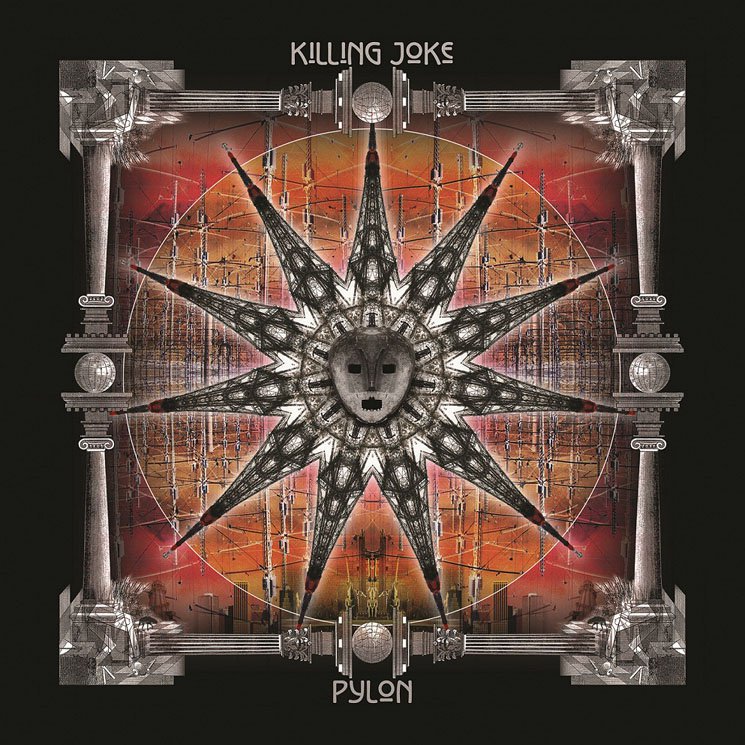
Album Review: Killing Joke – Pylon

Killing Joke Pylon Cover Art
Standard

It was inevitable that I would become a Killing Joke fan.  Funnily enough, one of my teachers at high school introduced me to them.

This teacher probably made one of the best impressions on me in my last year of school. He made of point of looking out for me and we often discussed our mutual love of music. He was from Birmingham – or “the town that GBH were from”, as he’d say. He loved telling me about the festivals and concerts he’d attended. Glastonbury was a perennial favourite. He’d attended Foo Fighters Wembley show that I had a DVD copy of. And most of his stories were about the early days of punk. I loaned him a few punk CD’s of bands I’d recently discovered – stuff like Rise Against and Anti-Flag – and he loaned me a few Killing Joke records in return.

I remember him showing them to me in class one morning. There was the original eponymous album, along with the 2003 album of the same name, with the bright colours and the creepy clown on the cover. He also had the second album, What’s This For?, and possibly Night Time. He gave me a cheeky grin and explained that this was the music he liked to play loudly when his wife wasn’t home.

I was transfixed when I gave the CD’s a listen. Listening to the music was like taking part in some kind of cult ritual.  It was raw, heavy and unique. The way that frontman Jaz Coleman hissed, shrieked spat and shouted his lyrics was so unconventional. The primitive tribal rhythms of the drumming was so powerful. The guitars were heavy and dynamic.

I quickly sought out my own copies of albums that featured two of my favourite drummers – Pandemonium, featuring Tom Larkin from Shihad, and Killing Joke [2003] featuring Dave Grohl. I read more about the band. It turned out Jaz Coleman was New Zealand citizen. He owned York St studios, and his influence as producer was obvious in the first Shihad album, Churn (and more recently, FVEY). I bought each successive Killing Joke album that the band released, and attended the Wellington gig of their first ever NZ tour in 2013.

Killing Joke

Pylon is studio album number 16, and third in a triptych along with Absolute Dissent (2010) and MMXII (2012). It follows the same formula that we’ve come to expect – crushingly heavy and abrasive post-punk with lighter new wave moments. There are the typical doom and gloom dystopian themes of paranoia, mistrust of the powers that be and protesting against surveillance. What are the odds that all four band members have prepped for the apocalypse, each owning bunkers filled with protective tinfoil suits and enough emergency supplies to last them a few decades? But in all seriousness, at least the lyrics contain some substance. Give me protest music full of conspiracy theories over mindless pop music any day.

Album opener “Autonomous Zone” signals a return to the familiar KJ sound. The bridge is especially good, with a drum solo leading into a driving middle eight. Listen out for the stunning bass guitar fills as well. “Dawn Of The Hive” is relentless, with a synths in the chorus sounding glossy yet dangerous. We have the same barrage of sound found in Absolute Dissent married with some of the poppy catchiness of Night Time.

What I like about Pylon is that despite the subject matters and heavy riffing, it isn’t too oppressing. There are more electronic sounds than I would have expected in light of their recent albums. “Euphoria” sounds, well, euphoric, along the lines of “In Cytheria” and “You’ll Never get To Me”. “New Cold War” features a Nine Inch Nails styled offbeat dance beat. “New Jerusalem” borders on jangly. The brighter new wave style brings balance to the music, and prevents it from becoming a boring sludgefest. This is not to say that the band has gone soft on us, but too much chugged riffing can start to grate.

In this current technological era Killing Joke could be seen as irrelevant cynics – old men angrily yelling at clouds. But then you consider their legacy, influencing and inspiring bands like Metallica,  Ministry, Nine Inch Nails, Nirvana, Shihad and Tool and it becomes clear that their importance doesn’t correlate with mainstream recognition. And if anything, Killing Joke should be celebrated for being underground and different. They’re not quite punk, metal or industrial. They’re not conventional. And their insistence on forging their own sound is what makes them so special.

After 16 albums, you could have forgiven Killing Joke if they had started to sound a bit stale. But they don’t. MMXII wasn’t my favourite, but Pylon is able to stand up on its own merit. It’s dense, murky and aggressive, without being overly depressing. It’s a visceral roar that pummels your ear canals. It’s paranoid and dark, subversive and political.  It’s the sort of music to blast when the wife is out.It’s exactly what you want to hear from Killing Joke.


Joseph James

EP Review: Kacy Hill – Bloo

Kacy Hill Bloo EP cover
Standard

It sounds like Kacy Hill is one of those lucky right-place-right-time people. She started out as a model (which could explain why she looks familiar, especially if you’ve ever seen American Apparel advertisements). This modelling work somehow led on into dancing, which landed her a role as a stage dancer on Kanye West’s Yeezus tour. Hill somehow managed to capture Ye’s attention, and after listening to her demo backstage, he decided to sign her to his label G.O.O.D Music.

If you’re not a Kanye fan, don’t let this put you off. This isn’t a hip hop release. Although it is definitely manufactured pop.

HIll has a great voice. The most similar name I can think of is Florence Welch (of Florence + the Machine).

First track “Foreign Fields” features crackles and static to give it a warm, vinyl-like feel. It’s a simple song that showcases Hill’s stunning voice, accompanied by crisp piano. There is a trip-hop vibe to it, with a handclap metranome transforming into an electro drum beat. The chorus feels messy with extra effects that make Hills sound distant and echo-y, but it helps to contrast against the slightly sterile verses.

EP highlight “Arm’s Length” takes us into Florence + Machine territory, with upliftingly cooed choruses and ethereal bridges. It’s a joyous anthem that marries delicacy with club music.  “Shades of Blue” brings the mood down. The thunderous drums are cool, but I question why Hill chose such a gloomy song as the closing track. When a début EP like this only contains three songs, each song needs to be strong enough to all make a positive statement. Ending on a depressing note taints the overall experience.

The piano-led gospel-come-pop works well, although the overproduction and excessive effects don’t always serve to enhance the music. The songs work best when striped right back to the basics of just piano and vocals. As they say, less is more. Hill’s voice is gorgeous, and I’d far rather listen to her than half the tripe that plays on the radio these days. This short taster is a promising show of Hill’s potential. Let’s just hope that in the future she can let the songs do the talking, instead of hiding behind unnecessary overproduction.

Joseph James