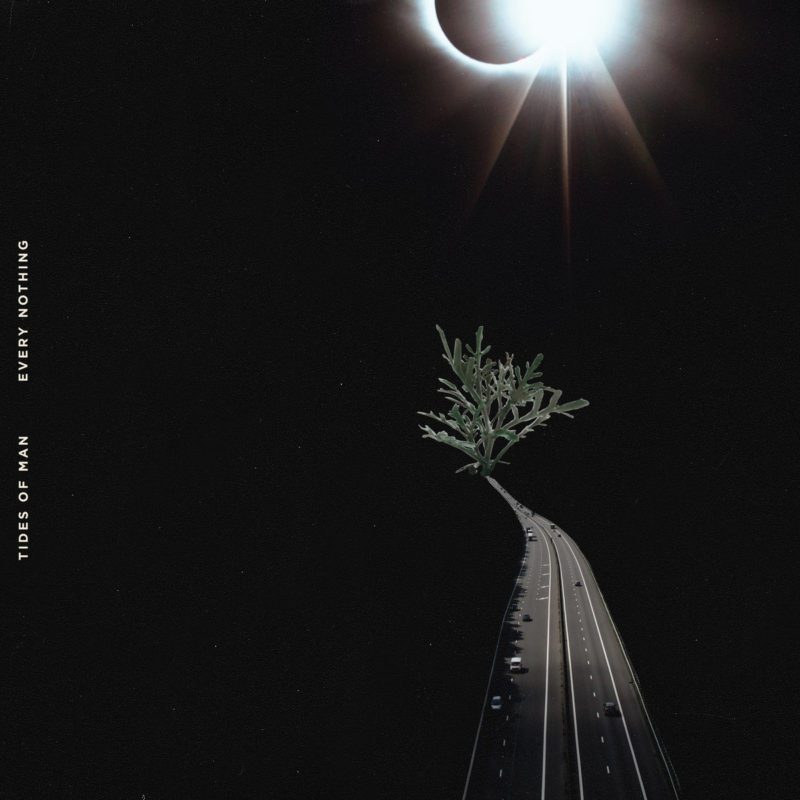
Album Review: Tides Of Man – Every Nothing

Tides of Man Every Nothing cover
Standard

I became friends with the guys in Tides of Man when on tour with Ranges last October. The two bands shared three dates on tour, as well as both playing the inaugural dunk!USA festival in Vermont. The day that I really got to know the guys in Tides was in Clifton, NJ. We got to the venue with plenty of time to spare, so after loading our gear into the venue we went on an adventure, exploring some nearby drains nicknamed “Gates of Hell”. Nothing like a shared adventure to help form a friendship!

That night I got locked backstage while the band played. It was during that set that I realised just how good the band was. I was already a Tides of Man fan based off their album Young and Courageous, but being able to watch them play that night, and the few nights that followed, added to my appreciation of the band.

I’ve been eagerly awaiting this new album since then. I was lucky enough to hear some of the new tracks played live in America, and again at dunk!festival in Belgium this May, so I knew that the record was going to be great.

Tides of Man dunk!festival 2018

Technically, this record is excellent. Most of the guys moonlight as sessions musicians, so are clearly adept at their craft and know their way around a studio. Not to mention that they have already released three other albums with which they could refine their sound and gel as a group.

I’ve listened to Every Nothing on heavy rotation for a month now. It’s an album that ages with time. With Every Nothing they’re trying new sounds, new textures, new feelings. And it’s stunning.

Most people’s first introduction to the album will be through the track “Static Hymn”, seeing as it is both the first single, and first track on the album. It warmly beckons us in, enveloping us with swirling haze. There’s a lot going on without it sounding overly busy. At 2.40 the music launches into blast beats and drill picking, melding a new hybrid of sounds that I’m going to nickname hope thrash – both intense and inviting.

Exploring sonic textural possibilities has paid off, because Every Nothing sounds so warm! They paint moody atmosphere with every masterful stroke. I can’t wait to get a copy on vinyl to hear it in its full glory.

It must be mentioned that Alan Jaye is a brilliant bass player. He dials his tones in – from the in-you-face intro of “Everything Is Fine, Everyone Is Happy”, to the spacey feel of “Outside Ourselves”. The solo bass during the drop out of “Waxwing” hits the spot so well.

His rhythmic counterpart Josh Gould matches him with talent and diversity, with plenty of interesting moments like the distant percussion outro in “Mercury Fields”, the open/close hi-hat playing in “Mosaic”. One hang up I have is that Josh’s drum tones could cut through more at times when his bright washy cymbals dominate the mix. I can’t fault his playing, I would just like to hear it more clearly in certain sections.

Possibly the best example of this Josh’s playing can be found in “Outside Ourselves”. Saturated with feeling, and offering sweet melodies, it is one the leviathan tracks on the album. Josh shows off his chops with prog drumming, playing around the beat with subtle finesse.

Tides of Man dunk!festival 2018

“New Futures” is one of the standout tracks, boasting powerful drumming and defined guitar playing. I dig this articulate sound, picking up Lost In The Riots kind of vibes. Josh brings us in on drums, with crisp rapping on the rims and alternate sticking on the hi-hats. The guitars come in looped layers of delay. 

I hear a new side of the band in piano ballad “Far Off”. Solemn, ghostly and ambient, it’s a song with strong gravitas. And, going off on a wild tangent: what do we hear in the background at 1.19 mark? A child shouting something? 

The This Will Destroy You influences are noticeable in “Death Is No Dread Enemy”. It’s hard to tell how much is digital or analogue within the mix, but there are certainly elements that sound electronic/triggered and offer fresh new textures and timbre. A brooding, searing piece that fluctuates between introspective and intense.

There are many brilliant moments to be found throughout Every Nothing. There are too many to list, but some of my favourite moments include during “Old 88″, when the sadness and longing explodes into something raw and defiant; The outro of “Keep Telling Yourself” with plucking sounds that mimic a lullaby music box; And the piece in “Waxwing” that transitions from harmonic riffing, to a bass solo, to everyone coming back in full force after the drop-out.
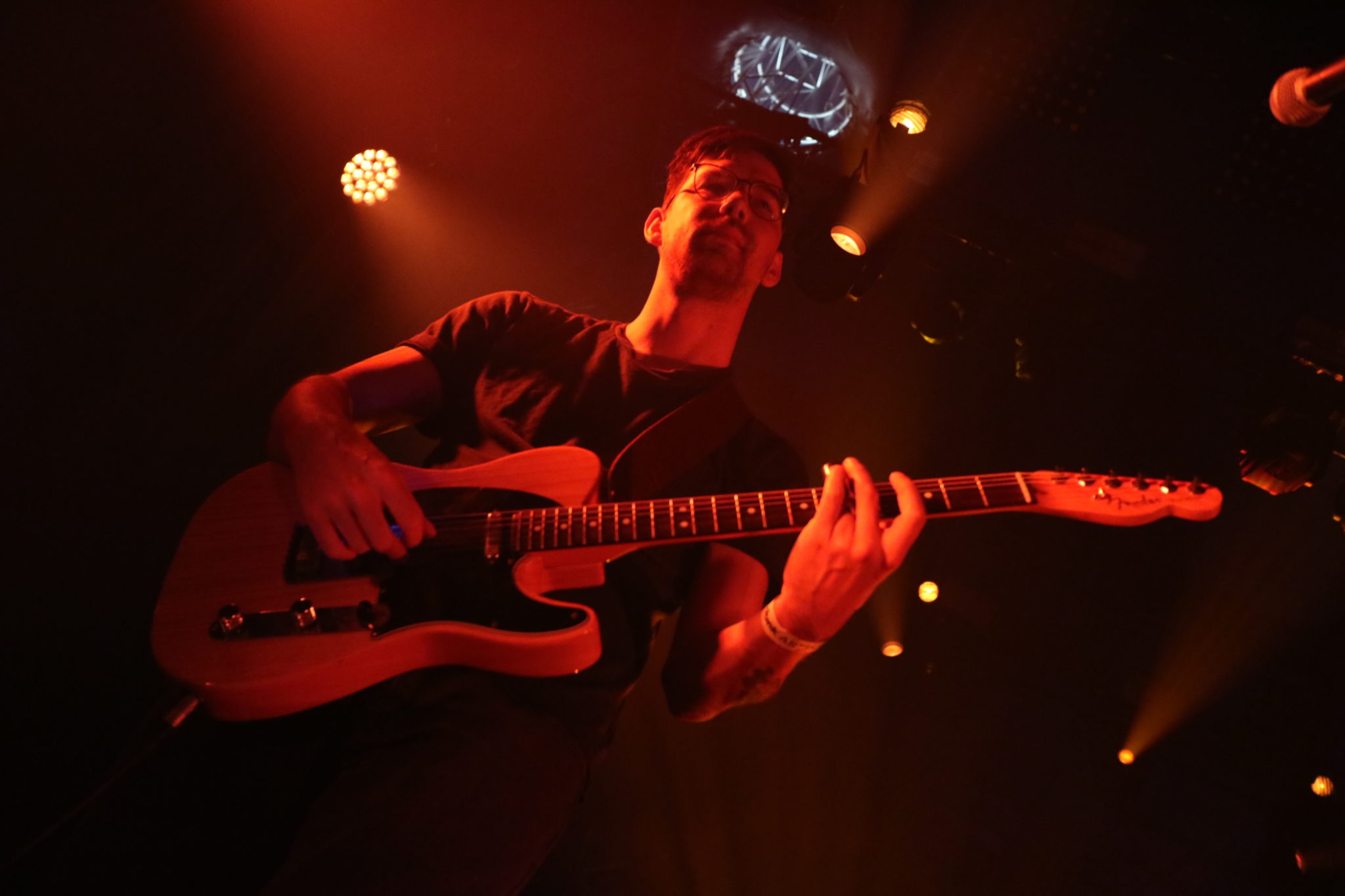
Spencer Tides of Man dunk!festival 2018

Strong emotions arise when I think of Tide of Man’s music. Being overwhelmed with joy when dancing along to “We Were Only Dreaming” every time I’ve seen them play it; Having raucous, carefree laughter as we drunkenly ‘sang’ the lead melody of “Young and Courageous” to some uninducted French Canadians in the back of a van after dunk!festival; Experiencing bittersweet sadness as Joey put on Young And Courageous in the tour van as we drove through New York state the day that our bands parted ways.

Every Nothing replicates these feelings, spanning the emotional spectrum as the band explores both the meaningfulness and monotony of life. Tender, mournful moments sit alongside intense elated explosions.

It’s a grower of an album, for sure. Bound to blow you away at first, but also rewarding you with new discovered intricacies upon repeated listens. There’s an undeniable homeliness to the record, being so warm, comforting and familiar. But even though it is settling, it also tugs you along on an epic adventure filled with exhilarating danger.


Order physical copies of Every Nothing from A Thousand Arms:
https://athousandarms.store/collections/tidesofman
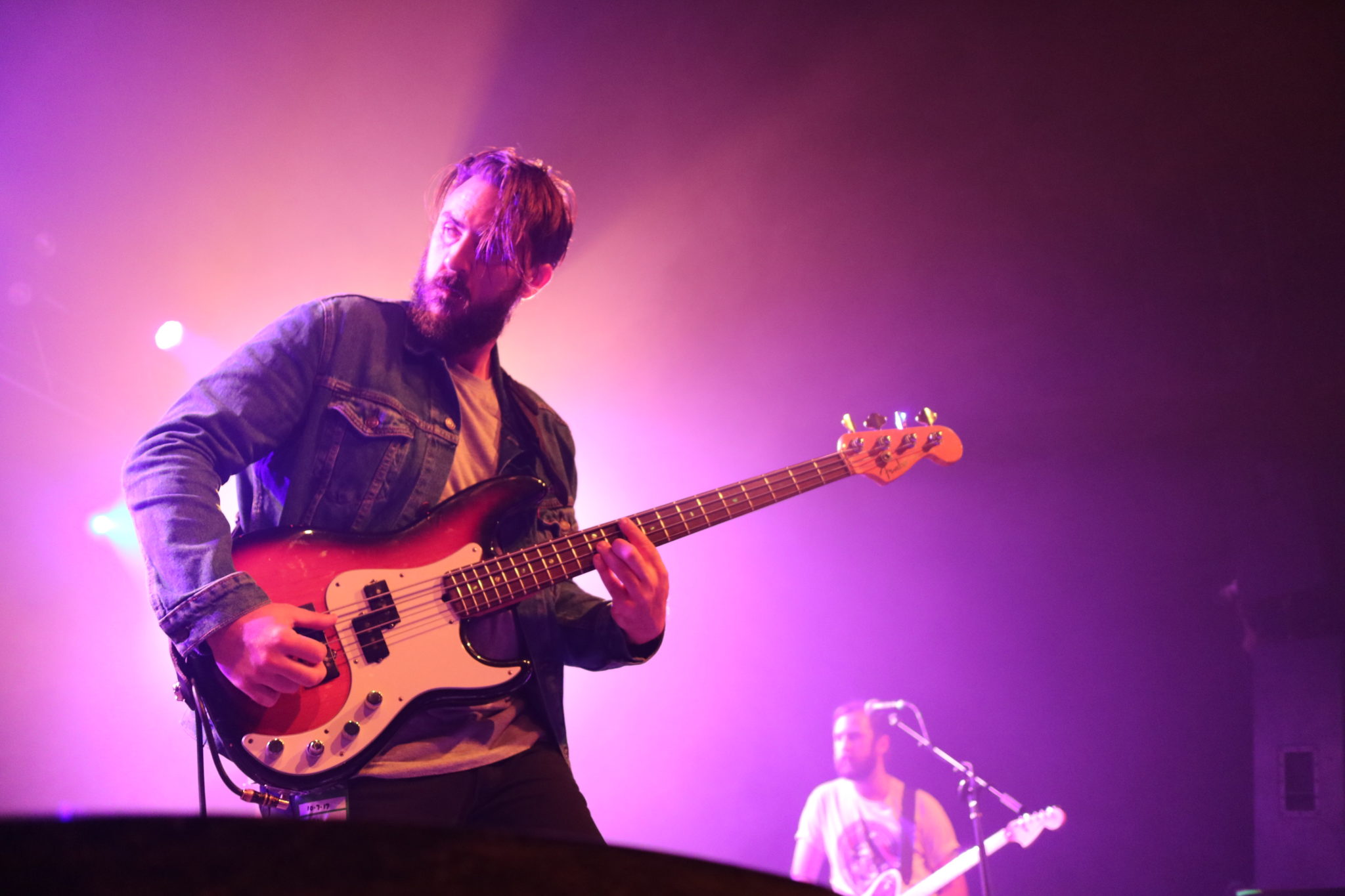
Tides of Man dunk!USA2017


Tides of Man links:

Facebook: https://www.facebook.com/tidesofman/
Bandcamp: https://tidesofman.bandcamp.com/
Twitter: https://twitter.com/tidesofman
Instagram: https://www.instagram.com/tidesofman/
Youtube: https://www.youtube.com/channel/UCGu5lp7dVJNbsYCEjN2Mk_A


Words and photos by Joseph James
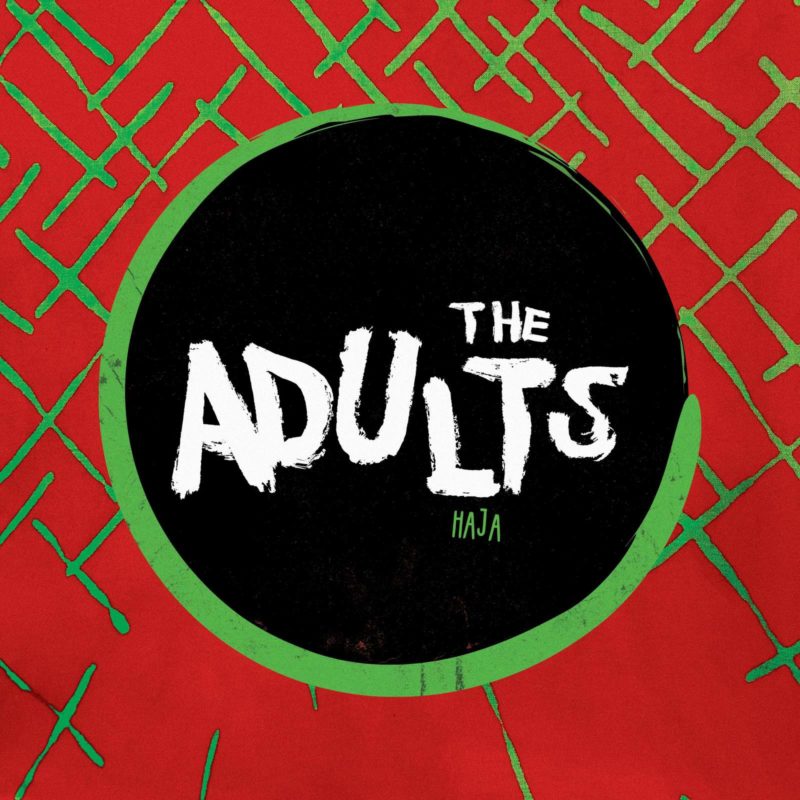
Album Review: The Adults – Haja

The Adults Haja cover
Standard

It was obvious from the first single that Jon Toogood’s new The Adults album possessed something different. The African influence and feminist leanings made the video look like it’d been lifted directly from the recent Black Panther movie. “Bloodlines” is a banger of a track, with raw primal energy, incredible percussion, powerful themes and a hip-hop direction. One listen and Toogood had my attention. I needed to hear the rest of the album!

Toogood released the début eponymous album by The Adults back in 2011. A collaborative project that involved inviting some of NZ’s première musicians to help write and record songs that didn’t fit the Shihad mould. Seven years later, Haja is a follow-up that loosely follows the same set up, but with far different results.

The story behind Haja is neat. When Toogood married his wife in Sudan he became enraptured with the traditional music played at the ceremony: Aghani-Al-Banat – which roughly translates as “girl’s music”. He asked the band to play with him for the new record, and then asked NZ musicians he admired to add their touches.

Now this isn’t exactly low-fi quality, but many of the tracks originate from phone recordings. Not that you’d know. They sound great, brimming with liveliness. Kudos to sound engineer Devin Abrams for creating something so good from what he had.

Opening track “Boomtown” lets us know from the first bar that we’re in for some fun, with pulsating bass, a beat you need to move to, and infectious African background vocals. Chelsea Jade’s cooed singing and hooks contrasts against Raiza Biza’s rapped verse, and both artists add authenticity to the track, having been born in African nations and immigrated to New Zealand. “Boomtown” is a strong, vibrant start to the album.

Title track “Haja” – an Arabic title of respect that means older/experienced woman – blends music from various cultures beautifully. The traditional Sudanise Aghani-Al-Banat music of vibrant drumming and chanting carried by bass lines. Two thirds into the track guitar comes to the forefront, which adds a light boogie feel to an already dance-able song [it reminds me a lot of “Plot A Course” by Barouche].

It wouldn’t be fair to say that “Take It On The Chin” drags, but within the context of the album it certainly lacks the energy of many of the other tracks. That said, it can’t be faulted when judged on its own merits. A lazy bass line, smooth flow courtesy of Kings, and some catchy hooks come together to culminate in a chilled yet triumphant track.

Likewise, “Because of You” is fine, but feels flat stacked against most of the other tracks. The vibrant Aghani-Al-Banat beats that provide a basis for most of the album colour those tracks so brightly that the songs without African drumming struggle to stand out. Toogood’s bass playing is a strongpoint throughout the album, and really carries this track, along with shimmery pads and synthetic sounding metronome that provide momentum.

“That Gold” feels like a throwback to the original The Adults album, with a Police-esque beat and bassline. Raiza Biza makes a second appearance; and Aaradhna’s soulful singing, Biza’s rapping, and Sudanese chanting overlap beautifully to offer complex vocal layers.

Album closer “Gisma” (the name of the leader of the Aghani-Al-Banat band) ventures into The Cure territory, with some introspective lyrics sung as a love letter from Toogood to his wife. It’s a tender side of Toogood that we don’t often see with his main band. I’m reminded of Shihad deep cut, “Lightbulb” from the Beautiful Machine bonus disc, or the acoustic Pacifier sessions they recorded at Radio New Zealand’s Helen Young Studios.

Shihad are one of my favourite bands, and by extension Toogood is one of my favourite singers. So I find it interesting that he has put out a record that you hardly hear him sing on. You could question why a New Zealand male is writing Sudanese music for girls [loosely paraphrased], or why a rocker is making a hip-hop album. But it works. It’s a great record. Maybe it’s wrong to consider it a Toogood record – because he’s not the star, but more the string that ties all these estranged influences together. Of course, this could explain why he chose to put this release out as The Adults, and not under his own name.

Haja is a short yet powerful record, carefully cultivated and packed with infectious energy. I can’t say I expected African feminist hip-hop from the singer of one of my fave hard-rock bands, but here you have it. Give it a listen and let the rhythms sweep you away.


The Adults links:

Facebook: https://www.facebook.com/theadultsnz/
Twitter: https://twitter.com/TheAdultsNZ
Youtube: https://www.youtube.com/theadults


Joseph James

Album Review: Alien Weaponry – Tū

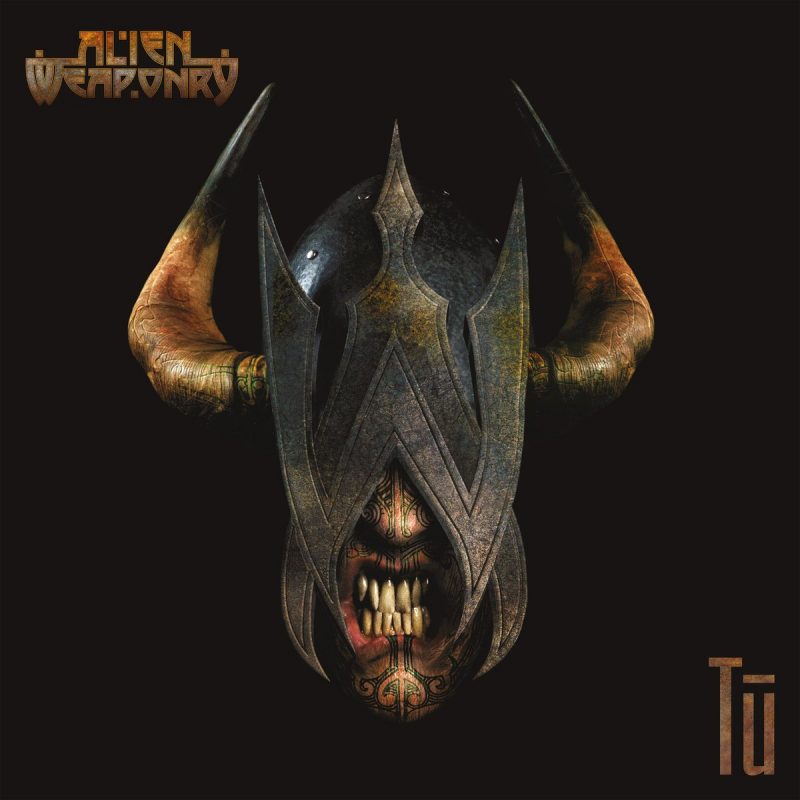
Alien Weaponry Tū
Standard

Mythical Māori figure Tūmatauenga is known as the god of war, among other things. That should give you a fair idea of what to expect when considering that metal trio Alien Weaponry have named their debut album after him.

Tū commences with “Waikōrero”, a haunting welcome recorded in some Waipu caves. The air hisses and hums as a purerehua [Māori bullroarer – literally translates as moth/butterfly] spins around overhead, while koauau [traditional flute] pierces the atmosphere with shrillness. Henry de Jong recites a welcome in his native tongue. This is how you set the mood.

Which makes the hard-hitting aggressive nature of first song “Rū Ana Te Whenua” all the more powerful by comparison “Listen up!” they cry: hear our message! Cue savage riffs and frenetic blast beats as they chant about the forces of nature unleashing. Death is coming! They reference caves where the dead lie resting, possibly similar to the caves where they recorded the “Waikōrero”. All this mention of death and destruction works in well with the heavy nature of the music, especially considering the warrior-like cries that the band emulate. The boys derived inspiration for the track from the stories of their tupuna [ancestor], Te Ahoaho, who fought the British at a notable battle of Pukehinahina (Gate Pa) in 1864.

I should mention that most songs on this album are not sung in English. New Zealand has two official languages: Te Reo Māori, and NZ Sign Language. [Surprisingly English isn’t an “official” language of NZ, although may as well be considered so by default]. Obviously sign isn’t going to feature in audio music recordings. And Māori is criminally under-represented.

Which makes Alien Weaponry unique, even within New Zealand. Sure, we’ve got a few token songs sung in te reo that charted here and there. Taika Waititi’s film Boy brought “Poi E” back to public conscious in 2010. I still remember the goosebumps I got when watching Tiki Tane perform “Tangaroa” at the NZVMAs as a teenager. Personally, the only use of reo I had in my music collection before Alien Weaponry was Kerretta using a karanga on “Kawea Tātou Ki Ngā Hiwi“.

This is obviously a big point of difference for the band. And it’s done with authenticity. The haunting mournful cries reflect karanga, and the strong chants could be compared to haka and war songs. They even use traditional instruments, which are effective in setting the tone as well as adding cultural value to the music.

Don’t let this put you off. You may not understand it all (I don’t), but this does little to detract from the music. I think it enhances the music by adding unique elements. Half of the tracks on the album are written in English anyway, with many songs also featuring dual languages.

Alien Weaponry

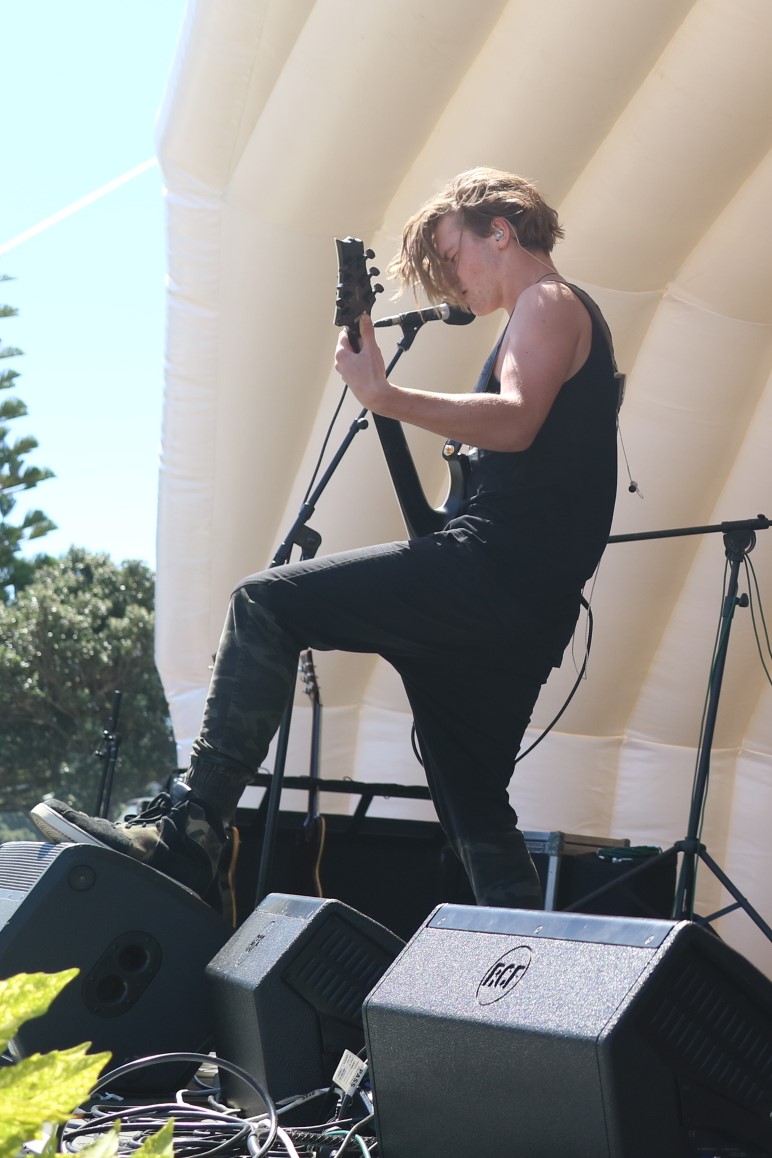
Lewis de Jong playing in Porirua on Waitangi Day. Image: Joseph James (Will Not Fade)

They touch on some heavy themes. “Holding my Breath” looks at struggling with anxiety, “PC Bro” explores the effects of social media, and how we can create false realities through it, and “Nobody Here” also explores the addictive nature of it. Fighting racism and retaining cultural identity are themes woven all throughout.

There’s also more than a few nods to their whakapapa [family history], with references to pre-colonial times and New Zealand historical events that happened once the European settlers arrived. “Kai Tangata” – the name a reference to war parties and cannibalistic practice – looks at how one Ngapuhi iwi [tribe] slaughtered another iwi with the use of muskets, which obviously outmatched traditional weapons that Te Arawa possessed. “Urutaa” tells a tale of how Europeans brought illness that Māori had no immunity against, which led to misunderstanding and paranoia.

“Raupatu” – the standout track on the album – is heavy, memorable and features a brutal breakdown. It translates as “Confiscated”, and discusses how the colonist government stole the lands from the native peoples, and set about trying to destroy Māori rights and identity. For many years Māori children were beaten at school for speaking their own language, the language that Alien Weaponry sing. But the message from the bridge is unmistakable:

“You take and take
But you cannot take from who we are
You cannot take our mana – (dignity)
You cannot take our māoritanga – (cultural identity)
You cannot take our people
You cannot take our whakapapa – (family heritage)
You cannot take, you cannot take
Raupatu!”

One criticism (if you can call it that) is that the sample at the start of “Whispers” is an interview with prominently racist politician Don Brash. The problem with this is that he is a lazy and ignorant man, and mispronounces the word ‘Māori’. I just wonder if international listeners would think that this is correct pronunciation, considering that they’d have no reason to know otherwise.

The production is decent. Tom Larkin from Shihad played a part in production, which earns them bonus points from me. I could certainly see an extra guitar coming in useful for filling out the sound, but they trio sound damn good for just a a three piece. And although it is thrash metal, they use dynamics well, as well as the traditional Māori instruments already mentioned, so it’s not all just a chug-fest that gets tired quick.

Put simply – this is an incredible release. A strong statement both musically and thematically, and all the more impressive when you consider that three school boys are behind it all. I am proud of Alien Weaponry for what they have achieved to date (including raising over USD $12,000 to record this album, and signing to Napalm Records), and can only see them gaining more success as they introduce their strong cultural identity to the world.


Alien Weaponry links:

Website: http://alienweaponry.com

Bandcamp: https://alienweaponry.bandcamp.com/album/t-2

Youtube: https://www.youtube.com/c/alienweaponry

Facebook: https://www.facebook.com/AlienWeaponry

Twitter: https://twitter.com/AlienWeaponry

Instagram: https://www.instagram.com/alienweaponry/

Joseph James

See also:

NGĀ TAMATOA WAIATA: AN INTERVIEW WITH ALIEN WEAPONRY (November 2017)

Update March 2023: Here’s a link to an academic thesis that I found online that cites my article and explores the wider reception of this album

Analysing decolonial glocalisation in the

themes, performances and discourses

surrounding Alien Weaponry’s debut album

Tū (2018)

Didier Goossens

Album Review: Frank Turner – Be More Kind

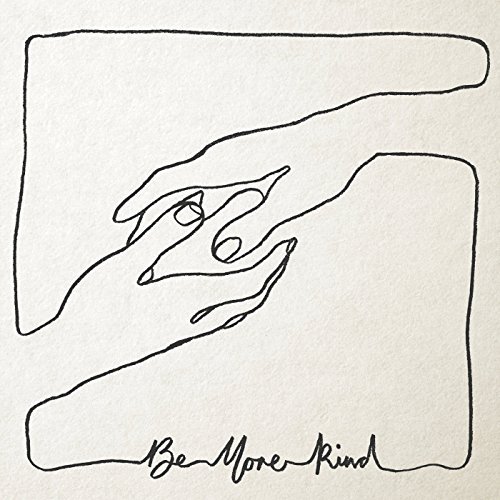
Frank Turner Be More Kind
Standard

I consider myself lucky that I got a sneak preview of this new album when I saw Frank Turner play in Vancouver last year. He’s been a favourite artist of mine for many years now, to the point that the very idea of a new record is super exciting. I’ve held out for it for a long time.

Was it worth the wait?

First up, I must mention that this album feels different. The last album signaled an upturn in mood – the very name denotes a shift to a more positive mentality. And following on from that, Be More Kind certainly boasts a happy-go-lucky vibe.

Admittedly, I was unsure about this record at first. It signals a fairly drastic change for Turner. But then, thinking about it, he has always drawn influence from many places. A hardcore kid gone singer/songwriter, dipping his toes in folk, country and rock along the way. And although this record sounds more campfire than punk rock, it’s still a great listen.

For most of this record, Turner has dropped the punk sound, but raised the punk ethos. It is a political record, albeit gently. Turner copped flack in the past when he flirted with political messages, receiving attacks because of his privileged background that included an education at Eton, and because his message didn’t align with that of many of his fan base.

But recent world events have been catalysts that shifted Turner’s stance, drawing him back to political songwriting. He implores us to fight injustice and hatred, to reclaim identity and join in solidarity against the rising face of nationalism. “Sand In The Gears“, Turner’s last release prior to Be More Kind, was the sound of defeat. Trump had just been elected, and Turner’s response was wanting to hang out at the bar or a punk show and forget about the world.

Thematically, “1933” follows on from “Sand In The Gears” with this desire of wanting to escape realities by hanging out at the bar, but slowly emerging from such a passive stance with a call to action – this time drawing parallels between the rise of Nazi Germany and current world events.

On the whole, Be More Kind compels us not to escape reality, but confront it. This is never more obvious than the track “Make America Great Again”, which takes Trump’s slogan and uses it against him, examining the aspects of America that make it a great country, and highlighting that those elements should … er… trump (?) the negative things that we’ve been associating with the USA in recent years.

It’s a weird call to action, considering the man who wrote it is a Englishman with a history of clearly patriotic songs. What right does he have to comment on the state of America? But I get it. I’m a New Zealander, and I love America too. I don’t blame the country as a whole for the actions of their government – much like I don’t often stand by the actions of my own government, even though they are supposed to represent me.

I can see this being one of the more divisive songs on the album. I enjoy both the music and the message, but picture it rubbing some people up the wrong way.

I don’t love Be More Kind as much as some of Turner’s other albums. I have no issue with the pop songs, but too many tracks are slow and drag down an otherwise catchy and fun album. Title track “Be More Kind” is just too tame for my liking, as are “Going Nowhere”, “The Lifeboat” and “Get It Right”. “21st Century Survival Blues” gets a borderline pass from me – almost worth skipping but with a redeemable chorus. It’s the folky songs that bring the side down.

That said, I’ve absolutely adored “There She Is” ever since I heard Turner preview it in Vancouver last year. It’s a slow burner that still sustains energy throughout.

I feel harsh saying this, but I have my critic hat on. I like Be More Kind, but it really is a case of singles that stand out, with filler sandwiched between them. “Don’t Worry” is a fun, carefree number – Jack Johnson meets “The Bare Necessities” complete with hand claps. “Little Changes” is a catchy wee ditty, with an infectious beat and horns. “Blackout” and “Brave Face” are both upbeat and enjoyable, as is the calmer “Common Ground”.

The verdict? Not a strong cohesive album, but still good enough that I’ll keep listening to it. And I’m still super excited to see Turner and The Sleeping Souls play when they come to New Zealand in November.

A cheesy quote springs to mind. Recent Star Wars film The Last Jedi featured a new character Rose, who says something that left me reflecting long after the film had finished:

“That’s how we’re gonna win. Not fighting what we hate, saving what we love.”

And I think that line sums up the message of Be More Kind. Fight injustice with kindness, make the racists ashamed, show compassion, celebrate life… Be more kind.


Joseph James

Album Review: The Sun Burns Bright – Through Dusk, Came The Light

sun burns bright through dust came the light
Standard

Bear with me when I try to explain The Sun Burns Bright.

The Sun Burns Bright is a solo project from Chris Garr, of Birmingham, England. It is also a Coastlands side-project.

Wait… what?

Garr contacted Coastlands guitarist Jason Sissoyev when he was writing this album, just discussing music in general. The two became pen pals, trading recordings back and forth as they collaboratively wrote an album over the course of 6-8 months. Coastlands drummer Richard Keefer added his beats, and then other Coastlands guitarist Jordan Patrick created the album art.

So we have a trans-Atlantic collaborative solo side project. Got it?

Through Dusk, Came The Light is an exercise in serenity. Tranquil notes, picked with care and precision.

As one has come to expect from the genre, there are serene passages, later with added percussion, which crescendos later in the piece, only to return to the calm soon after. It’s post-rock by numbers, but that isn’t always a bad thing. We find comfort in the familiar, and the warm tones found within Through Dusk, Came The Light only add to that homely feeling.

It’s a beautifully recorded album written with deliberate, exact notes and gorgeous tones. Which is surprising when you consider how it was recorded. That is, on iPads.

Now I know that most serious musos use Mac computers. I’m not a serious musician, so I couldn’t tell you why. But as a teacher, I’ve got very strong opinions about iPads. They’re cameras that don’t capture an image as well as a cheap point and shoot, computers with less functionality than a laptop, and overall horrible devices that create addicts of children in the name of “education”.

I can’t ever see myself changing my mind on this argument. But I cannot argue with the results here. This record sounds great. You won’t ever find me advocating for the use of iPads, but if Garr can create an incredible album like this through the use of Garageband and an iPad then I’ll accept that they have their uses.

Garr proves more then adept on guitar and composition. He explores aural textures with dynamic awareness and subtle layering. And Keefer’s deft drumming perfectly complements the music, adding thunderous energy without overpowering. 

Through Dusk, Came The Light takes the listener on a journey. From the epic climax of album opener “The Glass Is Always Full”, to the sweet melody of “Never Departing Shadow”, past the grandiose “Sky, Wand and Waves” to the sweeping solos of “Home Is Not A Place, It’s A Person”, to the final glitch infused pads of “Silhouette In The Shade”, this is an album that continually moves forward and treads the path of beauty.

The Sun Burns Bright isn’t the most original. But nor is it a tired imitation. It’s a solid début that appears to have already earned Garr a decent following from what I see online. And those fans have a lot to look forward – Garr is already working on album no. three, before even releasing his second one!


The Sun Burns Bright links:

Youtube album link: https://youtu.be/JoDhgwX7CsU

Joseph James


Update April 2022: Chris Garr has asked me to clarify that this wasn’t actually a Coastlands project. Garr wrote the album and The Sun Burns Bright is his project, he just had some of the guys from Coastlands help to record it. He has since had a rotating roster of other musicians help to record ensuing records. I’m sorry, I wasn’t trying to mislead anyone when I wrote this, I was more focused on making my writing entertaining to read.